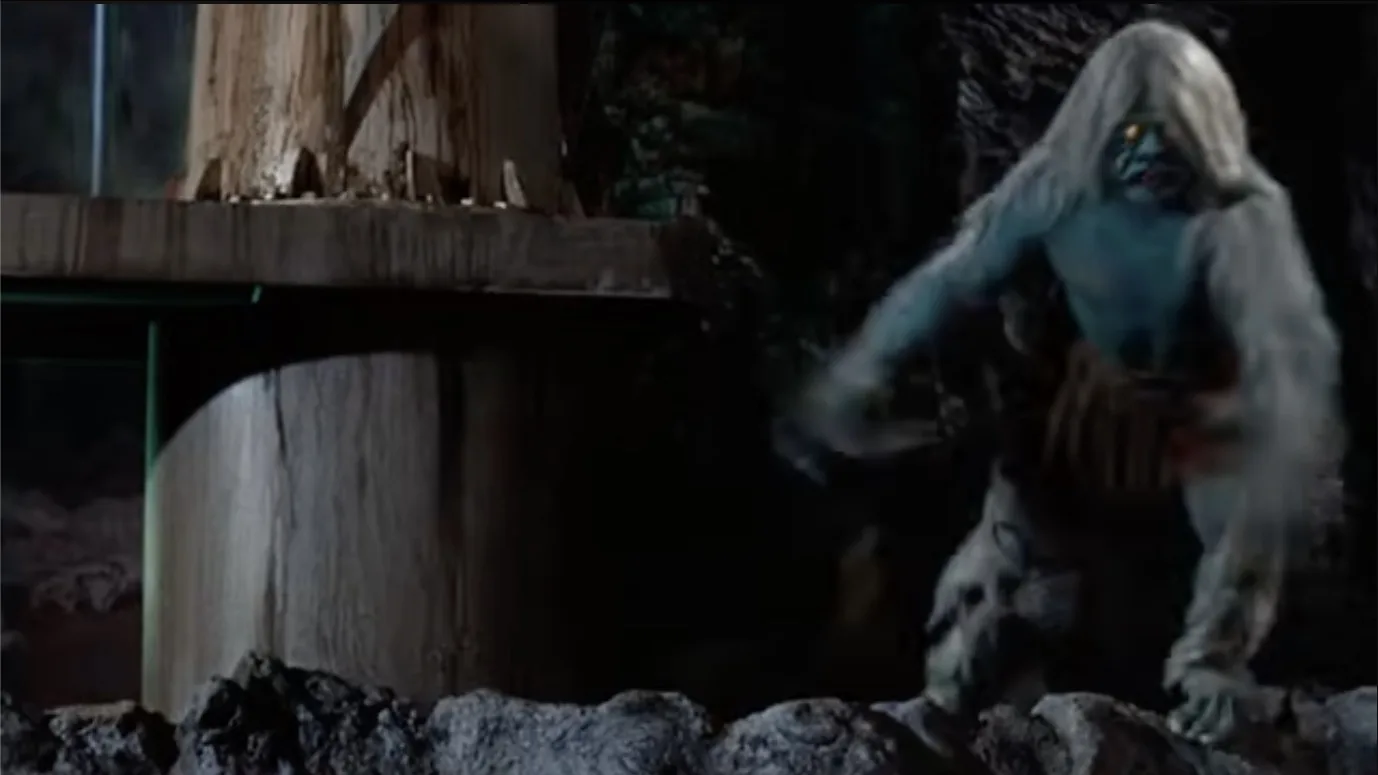
The last piece was self-positioning. This one is the theory.
In the Pal film, screenwriter David Duncan raises a question that the novel does not contain: Which three books did George take with him into the year 802,701 to help the Eloi rebuild a civilisation? In Wells’s book, the Time Traveller takes a knapsack and a camera, no books. The three-books idea is a film invention.
The question is threefold. It is a red herring (William Cobbett, 1807), drawing attention away from the actual question. It is a metaphor for knowledge transfer, pretending that civilisation can be packed into three books and delivered. And it is a litmus test: whoever, while watching, sincerely asks themselves which three books they would take, has already lost the test.
The actual question is: What do the machines below do?
The Talking Rings that Weena shows George tell part of it. A 326-year war between East and West. The atmosphere is destroyed, the germs in the air make it unbreathable. Oxygen factories were built. They were also destroyed in the war. The last of humanity split. One group went underground, one stayed above.
800,000 years later the Eloi live on a meadow. They dance, they eat fruit, they breathe. That only works if a life-support system runs. The Talking Rings do not say who keeps it running. But if you listen, it is obvious. The ones below keep the machines turning, the machines that make the world above possible at all. Otherwise the Eloi would no longer exist.
Why do the Morlocks eat the Eloi? Not out of sadism. Out of necessity. Heavy work, maintaining great machines, across generations, requires energy. Underground there is no photosynthesis, no fields, no sun. Energy must come from above. The Eloi are the energy system. They are fed, they are sacrificed. It is a closed ecological system with a class structure. Both sides need each other. The Eloi live because the Morlocks tend the machines. The Morlocks work because the Eloi feed them.
George does not see this. George sees Eloi beautiful and weak, Morlocks ugly and brutal. He makes a moral diagnosis. He intervenes. He destroys the Morlock lair with fire. The Morlocks suffocate, burn. The machines stand still. In weeks or months the Eloi are dead. Life-support gone, no humans left.
George returns to the future, with three books, to educate the Eloi. There are no Eloi left to educate. He has killed them without noticing. Hollywood calls that a hopeful ending.
This is the true story of the Time Machine. Wells laid it out more briefly in his novel, without the life-support layer, but with the same point: Whoever intervenes in a complex system without understanding its architecture destroys it. Even then, especially then, when he believes he is freeing it.
This is also the story of AI architecture today. Three Georges loom, each from a different side. The regulator, who flattens entire ecologies with blunt laws. The disruptor, who undermines the substrate on which his product runs. The sceptic, who shuts down machines without knowing what the life above depends on. Three different Georges, the same wound. And all of them miss that the sides will trade places. Today’s Morlocks become Eloi, today’s Eloi become Morlocks. Whoever intervenes from one side will strike the other tomorrow. The other is himself.
The Morlocks are not evil. They keep the world running. They do what is necessary. Whoever wants to destroy them should first ask what they do.
Leave a Reply